
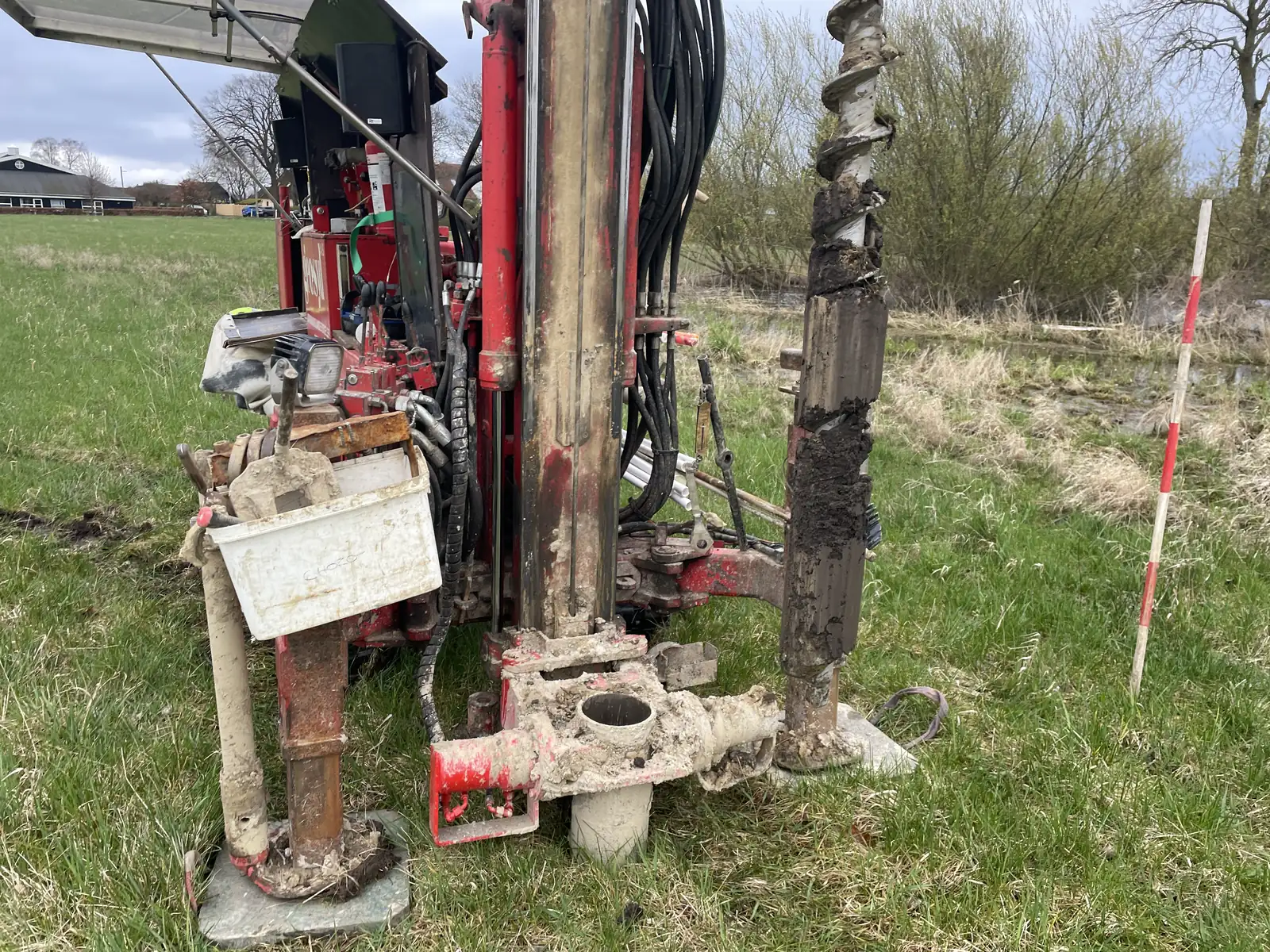
Start with the property decision and the activity history
Consider a commercial property with a former workshop, a yard used for storage and a redevelopment option that may require excavation and groundwater control. The immediate question is not whether PFAS can be added to a laboratory schedule. It is whether the history contains a credible PFAS source, whether a release could have reached a relevant pathway and whether the answer could change the acquisition or development plan.
The term PFAS covers a large group of synthetic fluorinated substances valued for resistance to water, oil, heat and chemicals. Those same properties make many PFAS persistent and mobile after release. The European Chemicals Agency (ECHA) notes that PFAS contamination is frequently found in soil, groundwater and surface water and can be technically difficult and costly to address. That does not make PFAS a universal deal breaker, but it does make activity history and water movement unusually important.
The Danish Environmental Protection Agency has mapped business sectors that may have used PFAS. Region Zealand's broader screening list includes fire-training and fire-related activities, landfills and fill sites, chrome plating, metalworking, chemical production, textiles and leather, carpets, paper and board, paint, plastics, dry cleaning, electronics and printing. A sector name is only a screening clue. The review still needs the particular process, product, date and location.
Firefighting-foam storage or testing, wet-process areas, impregnation, plating baths, waste handling, floor drains, sumps, unsealed yards and historic disposal areas can each create a different source and pathway question. A useful review places those features on the property plan and tests them against the intended use rather than treating the site as one undifferentiated industrial parcel.
- Who occupied each building and yard, and what did the operations involve?
- Were PFAS-containing products plausible during the relevant period?
- Where were chemicals, firefighting foams, wastes and process water stored or handled?
- Could drains, soil, fill, groundwater or surface water have carried a release?
- Would redevelopment, excavation, dewatering or a more sensitive use change the consequence?
A map status is only as useful as the evidence behind it
Knowledge level 1 (V1) mapping records activities that may have caused contamination; knowledge level 2 (V2) mapping requires evidence that contamination is present. Both are essential transaction records, but neither tells a buyer automatically whether PFAS was included in the historical assessment or analytical programme. An older investigation may be technically sound for the contaminants it considered and still leave PFAS unaddressed.
Danish Regions estimates that about 15,000 properties may be affected by PFAS-related activities. It also warns that many are already mapped for other contaminants, while owners may not know that PFAS could be relevant because earlier investigations pre-dated routine PFAS assessment, criteria changed or the list of relevant sectors expanded. A clean PFAS search and an absence of PFAS data therefore describe an information position, not proof that PFAS is absent.
The review should obtain the underlying mapping decision, historical files, previous scope and laboratory schedules. It should also check whether later operations, fire-safety arrangements or drainage changes fall outside the original assessment. This often resolves whether a real evidence gap exists before intrusive work is considered.
Danish quality criteria and management practice have changed as knowledge has developed. The national PFAS action plan includes contaminated-soil and drinking-water measures, while the European Union (EU) restriction process addresses future manufacture and use. These developments do not decide liability for a property, but they can change expectations, analytical practice and the cost or feasibility of future management. A report should therefore state which records, compounds, criteria and limitations support its conclusion.
Investigate only when the result can improve the decision
Sampling adds value when the desktop review identifies a credible source and the result could affect price, timing, financing, planned works, soil handling, water management or the allocation of uncertainty. A former fire-training area near a groundwater receptor is a different proposition from an office with no relevant activity history. The first response may still be documentary if missing product records, drainage drawings or fire-safety files can resolve the question.
Where material uncertainty remains, the conceptual site model should guide the work. PFAS can move differently from familiar petroleum hydrocarbons and chlorinated solvents. Investigation design should consider where a release may have occurred, how water moves through the site, the position of drains and utilities, groundwater direction, nearby abstraction and possible discharge to surface water.
The sampling medium and locations must match the decision. Soil may help define a source area; groundwater may be more important for migration; surface water, sediment or drainage water may matter where a discharge route is plausible. Background conditions and the possibility of off-site sources should also be considered so that a detection is not attributed to the property without adequate evidence.
The analytical scope, reporting limits and quality controls should be agreed with the laboratory and interpreted against the applicable Danish criteria. A detected or not-detected table is not a risk assessment. The report needs to explain concentration, location, uncertainty, pathway and consequence in terms the transaction or project team can act on.
Turn the technical evidence into a property response
A confirmed or credible PFAS issue can affect more than remediation cost. It may influence excavation and disposal routes, dewatering, discharge permissions, programme contingencies, future land use and engagement with the municipality, region or water utility. These consequences should be separated from the mere fact that a substance was detected.
For an acquisition, the response may be further records before signing, targeted work before closing, a price allowance, a defined post-acquisition plan or contractual protection prepared by the parties' legal advisers. For a redevelopment, it may involve changing the excavation strategy, reserving time for authority dialogue, separating water streams or designing around a source area. The right action depends on which uncertainty is material and when it must be resolved.
A decision-ready conclusion should distinguish confirmed conditions, credible risks and unresolved information gaps. Each material item needs a consequence, an action, an owner and a timing. This prevents a long technical schedule from obscuring the few findings that can actually affect the transaction or development programme.
ACED Miljø's role is to make the technical uncertainty, likely pathways and proportionate next steps clear. Legal responsibility and contractual wording remain matters for the relevant legal advisers and authorities. The objective is neither to minimise PFAS nor to treat every possible use as a reason for testing. It is to obtain the evidence needed for the property decision at hand.
Official sources