Start with the route, not the drain cover
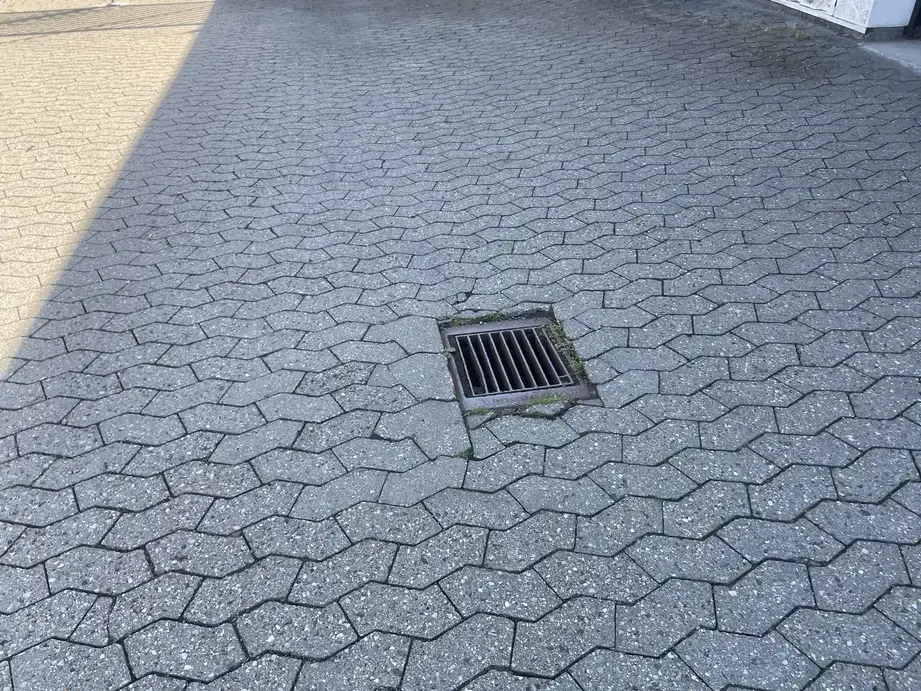
A site visit may show a clean floor, a recently painted workshop or a single drain grate. None of those observations identifies the complete drainage route. A drain may connect to a foul sewer, a separate surface-water system, an oil separator, a collection tank, a soakaway or an installation that has since been altered. Old drawings may describe a former layout rather than what remains below the floor.
The useful environmental question is therefore not simply whether a drain exists. It is what entered it, during which activities, where the liquid could travel and what controlled that route. Vehicle repair, parts washing, floor cleaning, fuel handling, chemical storage and outdoor loading can create different source and pathway questions. A separator that is suitable for one flow may not address solvents, detergents or emulsified oil, and its presence does not prove that every relevant drain is connected to it.
Visual condition also has limits. An intact-looking slab can conceal redundant channels, patched sumps or leaking below-ground pipework. Conversely, staining or a damaged joint does not by itself establish that contamination reached soil or groundwater. The observation needs to be connected to the activity, drainage route, duration and any available incident or investigation record.
The applicable requirement depends on the activity and destination
The current Danish Environmental Protection Act is consolidated as Act no. 1742 of 22 December 2025, with later amendments listed by Retsinformation. Section 19 states that substances, products and materials capable of polluting groundwater, soil or the subsurface may not, without permission, be buried, discharged or placed on the ground, or led into the subsurface. Section 28 addresses permissions for wastewater discharges and connections to wastewater utility systems.
More specific rules can apply to particular activities. For vehicle workshops, Executive Order no. 908 of 30 August 2019 requires areas where there is a more than insignificant risk of spills of petrol, other oil products or environmentally hazardous substances to contain the spill within a defined area without drainage to soil, groundwater or surface water. Wastewater from those areas must pass through a suitable oil separator. The order contains separate requirements for storage areas and wastewater from spray booths, wash halls and similar installations.
Those vehicle-workshop provisions should not be copied automatically to every industrial building. A former machine shop, warehouse or production property may be governed by different permissions, approvals, local wastewater conditions or activity-specific rules. The operating history and discharge destination must be established before drawing a legal conclusion.
The Danish Building Regulations also treat drainage as an installation that must be designed, operated and maintained to avoid pollution, unintended leakage and damage. Chapter 4, sections 69 to 81, covers drainage routes, access for maintenance and operating information. A building-compliance record and an environmental operating record answer different questions, so one should not replace the other.
Digital Environmental Administration, known by its Danish abbreviation DMA, publishes environmental approvals, inspection reports and enforcement information for covered businesses. The Danish Environmental Protection Agency states that DMA is not a register of every Danish business and contains historic documents only where the relevant authority has transferred them. A blank search result is therefore not proof that no permission, inspection or historic issue exists.
Build one evidence trail from activity to outlet
A proportionate review should reconcile documents with the physical property. The following evidence is usually more useful than a generic statement that the site has an oil separator.
Missing information should be reported as an evidence gap, not automatically as non-compliance or contamination. The next step may be retrieval of municipal files, a drainage survey, separator inspection or targeted connection testing. Soil or groundwater sampling is proportionate only where the source and pathway evidence creates a question that the result can help answer.
- Activity history: what work took place in each building and yard area, which liquids were handled, and when did those activities begin, change or end?
- Drain inventory: where are floor drains, channels, sumps, wash areas, yard gullies and redundant or sealed connections, and do current plans match what is visible?
- Destination: which drains lead to foul sewer, surface-water sewer, a collection tank, a separator, a soakaway or another outlet, and is the route supported by drawings, surveys or testing?
- Treatment and containment: what separator, sand trap, shut-off valve, alarm or bund is installed, which flows pass through it, and what was it designed to handle?
- Permissions and conditions: are there wastewater connection or discharge permissions, environmental approvals, workshop notifications or inspection reports, and do they match the current site?
- Operation and incidents: are emptying, inspection, repair and alarm records available, and have spills, blockages, flooding, detergent changes or unexplained repairs been recorded?
What this means for property decisions
For an acquisition, request drainage drawings, wastewater permissions, environmental approvals, separator specifications, service and emptying records, incident logs and records of drainage alterations. Compare them with the site visit. A drawing that cannot be reconciled with the installed drains is not a reliable drainage record.
For capital planning, separate present operation, hidden condition and future use. A system may serve the current tenant but require inspection, repair or redesign for a new workshop process. A redundant drain may need verified sealing. An old separator may need a capacity or condition assessment even when there is no evidence of historic contamination.
For leased property, identify who operates the workshop, holds the wastewater permission, arranges separator servicing, reports incidents and controls alterations. The lease can allocate costs and obligations between parties, but it does not by itself prove that the physical system or regulatory record is complete.
Transaction reporting should avoid unsupported conclusions such as "the floor is clean, so there is no drainage risk" or "an oil separator makes the system compliant". A defensible conclusion identifies the activity, observed inlet, documented route, available controls, remaining uncertainty, consequence for the property plan and next action.
ACED Miljø can integrate drainage evidence into environmental due diligence and transaction risk assessment. Drainage specialists, the relevant municipality and legal advisers should confirm installation condition, permission requirements and legal responsibility for the specific property.
Official sources